18 Earring Display Card 2.3 x2.3 Graphics and Print Templates
As a brand designer who has spent years helping small businesses and content creators build cohesive visual identities, I often find myself sifting through digital assets that promise efficiency but deliver chaos. The market is flooded with generic clipart, but finding elements that actually support professional branding while remaining versatile enough for diverse campaigns is rare. Recently, I evaluated a specific graphic design asset called the 18 Earring Display Card 2.3 x2.3. This collection falls squarely into the category of Print Templates and Graphics, offering a suite of files designed to elevate product presentation. In this review, I will break down how this asset performs in real-world marketing scenarios, its impact on audience perception, and whether it deserves a spot in your creative workflow.
First Impressions and Brand Mood
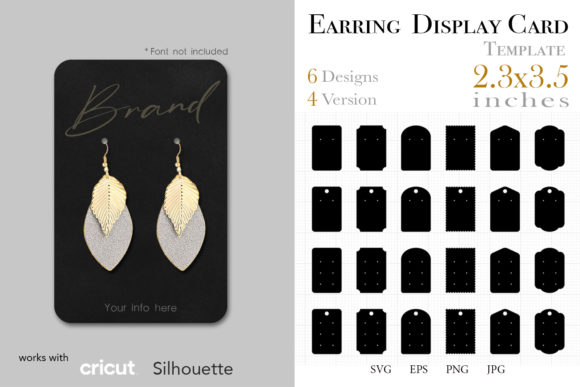
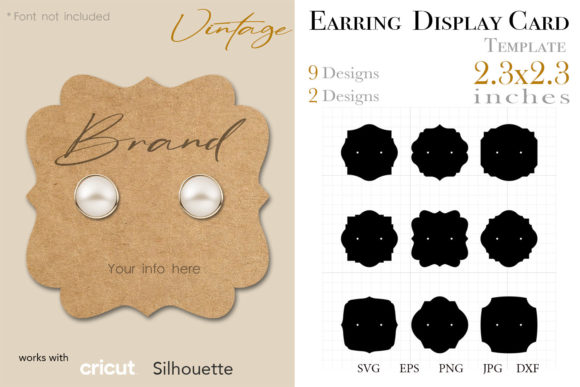
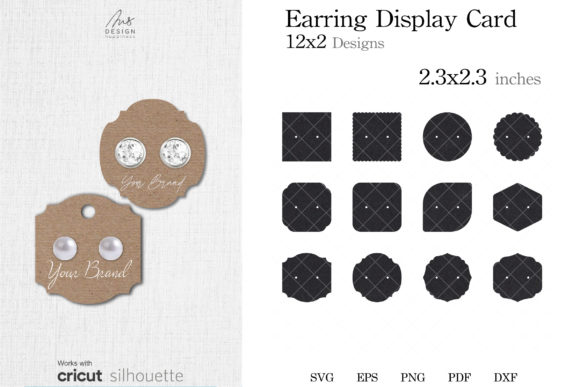
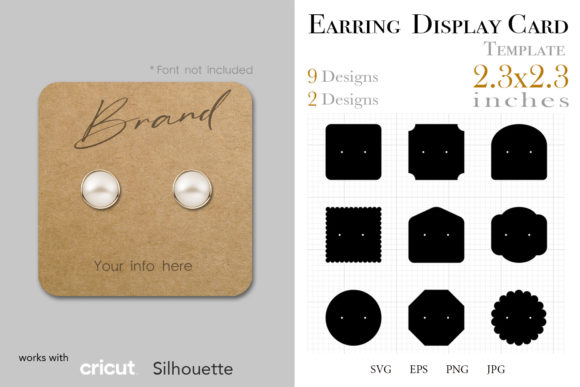
When you first open the folder containing the 18 Earring Display Card 2.3 x2.3, the immediate takeaway is its structural clarity. These are not merely decorative stickers; they are functional display cards sized at 2.3 by 2.3 inches. From a brand identity perspective, this dimension is critical. It is large enough to hold attention yet compact enough to fit neatly on packaging inserts or social media grids without overwhelming the frame.
The mood created by these templates leans heavily toward organized elegance. Whether you are selling handmade jewelry, digital planners, or boutique accessories, these cards provide a clean canvas that suggests professionalism. They avoid the cluttered aesthetic that often plagues amateur designs, instead offering a structured layout that guides the eye. This makes them suitable for small business branding where trust and reliability are paramount. The visual tone is neutral enough to adapt to various niches, from bohemian lifestyle brands to modern minimalist shops, ensuring that your product label or digital graphic feels intentional rather than improvised.
Real-World Marketing Applications
To truly understand the value of this asset, imagine a scenario: You are a creator launching a new line of silver earrings. You need to produce a month’s worth of social media graphics, create printable thank-you cards for your Etsy orders, and design a lead magnet for your email list. Traditionally, this would require hours of vector work in Illustrator or complex layering in Photoshop. With the 18 Earring Display Card 2.3 x2.3, the workflow changes dramatically.
- Social Media Consistency: Use the individual SVG files to create uniform Instagram posts. By placing your product image over one of these card templates, you establish a recognizable pattern. When users scroll through your feed, the consistent visual hierarchy reinforces your brand identity.
- Packaging Inserts: Print the PNG or JPG versions on high-quality cardstock. These serve as excellent backing cards for your physical products. They enhance the unboxing experience, making customers feel they received a premium item, which directly impacts audience trust.
- Digital Ads: For Facebook or Pinterest ads, these cards can act as backgrounds or framing devices. They help isolate the product from busy backgrounds, ensuring the main message remains clear. This is crucial for digital ads where attention spans are short.
- Content Marketing: If you write a blog about styling tips, use these cards in your featured images. They add a polished touch to editorial design within your website headers or sidebars.
The versatility extends to Canva templates as well. Since you receive multiple file formats, you can easily import these into drag-and-drop platforms, allowing non-designers to maintain visual consistency across all their marketing materials.
Supporting Core Marketing Goals
Why does this specific design bundle matter for your bottom line? It comes down to three key pillars: recognition, trust, and engagement.
First, stronger first impression is achieved through uniformity. When every product photo, ad, and insert uses the same structural element, your brand becomes instantly recognizable. Second, it builds audience trust. A messy or inconsistent presentation signals carelessness, whereas a well-designed display card signals that you pay attention to detail. Finally, it drives better engagement. Visually appealing assets stop the scroll. On platforms like Pinterest, where aesthetics drive traffic, a clean, well-proportioned card stands out against cluttered pins.
This asset supports content marketing by providing a reusable framework. Instead of reinventing the wheel for every campaign, you simply swap out the central image or text. This efficiency allows you to focus more time on strategy and less on pixel-pushing.
Strategic Placement and Limitations
While the 18 Earring Display Card 2.3 x2.3 is powerful, it is not a universal solution. Understanding where it fits—and where it does not—is essential for modern design success.
Where it works best:
- Hero Graphics: Use it as a background element in campaign headers to anchor your main headline.
- Product Launch Visuals: Highlight new arrivals by placing them centrally on the card template.
- Packaging Accents: Add subtle branding to boxes or envelopes using the EPS file for crisp printing.
- Decorative Brand Elements: Use them as dividers or bullet points in long-form content.
Where to use carefully:
- Formal Corporate Branding: If your brand is strictly corporate and serious, these playful yet structured cards might feel too casual. Ensure they align with your existing logo design guidelines.
- Dense Information Layouts: Avoid using these in layouts already crowded with text. They are meant to frame content, not compete with it.
- Small Mobile Graphics: At 2.3 inches, they may lose detail if scaled down too far for tiny mobile icons. Always test readability.
- Low-Contrast Backgrounds: Ensure the card stands out against your background color. Poor contrast kills visual hierarchy.
Practical Designer Notes for Implementation
To get the most out of this creative design, follow these technical checks before finalizing your campaigns:
- Color Palette Testing: Import the SVG files into your design software and apply your brand colors. Check how the card interacts with your primary and secondary hues. Does it clash? Does it harmonize?
- Black and White Review: Convert the asset to grayscale. This helps you assess the balance and spacing without relying on color. If it looks weak in black and white, it will likely look weak in color.
- Font Pairing: Test different typography styles. See how the card pairs with a serif font for elegance, a sans-serif font for modernity, or a script font for a personal touch. The right font choice can transform a simple template into a professional branding tool.
- Mobile Preview: View the final design on a smartphone screen. Ensure that any text added to the card is legible and that the overall composition doesn’t feel cramped.
- Commercial Licensing: Before using this in paid campaigns or client work, confirm the commercial license terms. Most design assets from creative marketplaces allow commercial use, but verifying this protects your business from legal issues.
Final Verdict
The 18 Earring Display Card 2.3 x2.3 is more than just a set of images; it is a strategic tool for visual content creation. By providing 18 individual variations along with comprehensive file formats (SVG, PNG, JPG, EPS), it caters to both technical designers and casual creators. It solves the common pain point of inconsistent branding by offering a ready-made structure that enhances product presentation.
For entrepreneurs looking to upgrade their printable design game, improve their social media graphics, or streamline their packaging design, this asset offers significant value. It bridges the gap between amateur presentations and polished, market-ready visuals. If you are serious about building a brand that resonates with your audience and stands out in a crowded marketplace, integrating this clipart and illustration bundle into your workflow is a smart, efficient move.